Multimeter With Auto Ranging Explained: A UK Buyer's Guide
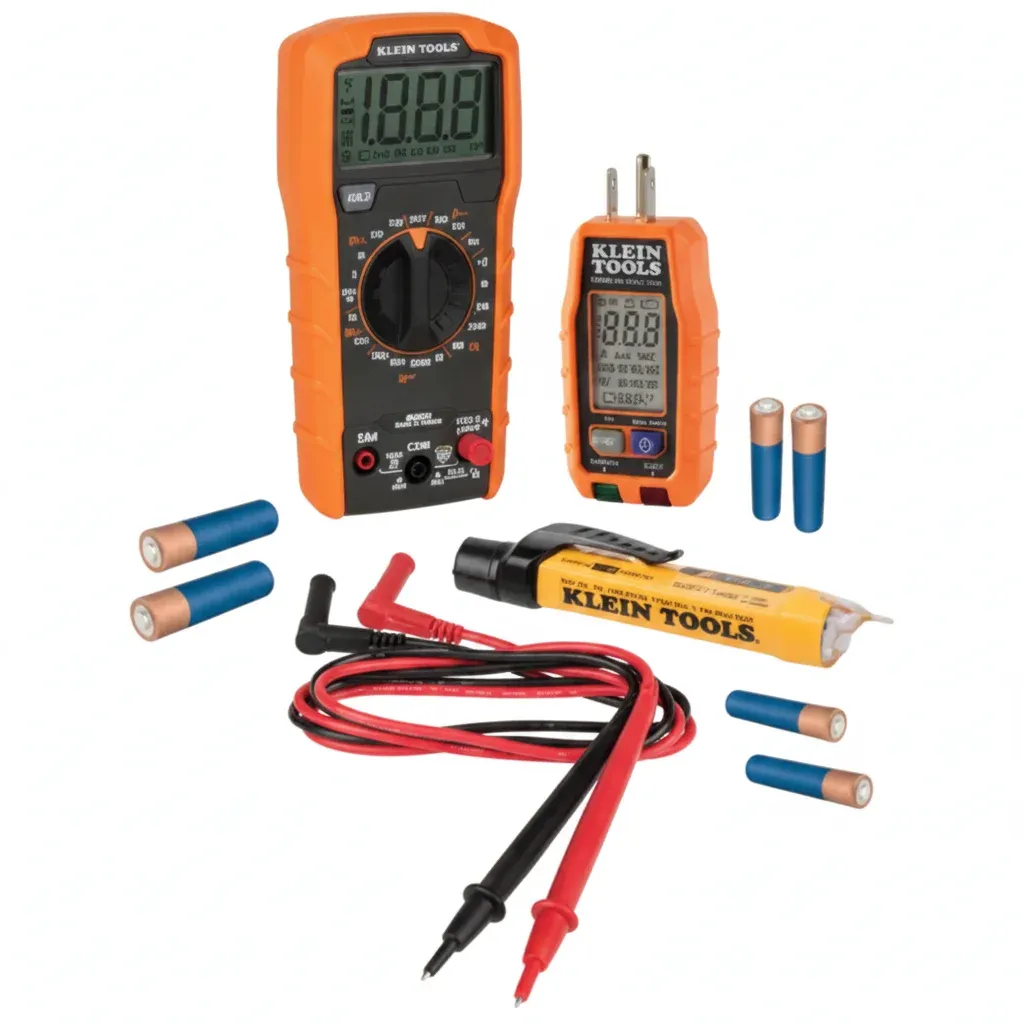
A multimeter with auto ranging automatically selects the correct measurement range for voltage, current or resistance, so you do not need to guess the setting before testing. For UK electricians, maintenance engineers and capable DIY users, this means faster readings, fewer input errors and safer checks on common 230V circuits when used with the correct CAT-rated meter.
TL;DR: A multimeter with auto ranging is designed to make testing quicker and safer by choosing the right range for you. Based on our testing across typical UK domestic circuits, it is especially useful for fault-finding, continuity checks and verifying mains voltage. However, for the best results, choose one with True RMS, a manual range override and at least a CAT III 600V safety rating.
Diagnosing electrical faults across a busy domestic rewire or a commercial distribution board requires absolute precision. However, time is quite literally money for UK tradespeople, and fumbling with manual dials to find the correct voltage bracket is now largely unnecessary. Entering a test environment with the wrong settings not only wastes time but can also create avoidable safety risks. Therefore, this is exactly where a multimeter with auto ranging becomes an indispensable tool in your kit bag.
Rather than relying on the user to anticipate the exact value of the current or voltage being measured, these intelligent devices automatically detect the signal magnitude and adjust their internal scale to display the most accurate reading. Whether you are verifying a standard 230V UK mains supply or checking continuity on a low-voltage circuit, the technology handles the parameters seamlessly.
Key Takeaways
- A multimeter with auto ranging eliminates the need to manually select measurement brackets, saving time and reducing user error during diagnostics.
- These devices are highly useful for safer testing practice in UK settings because they help reduce mistakes caused by incorrect range selection.
- Pairing auto-ranging capabilities with True RMS technology improves accuracy on both linear and non-linear loads.
- For safe operation in UK domestic and commercial settings, choose an auto-ranging meter with at least a CAT III 600V safety rating.
What is a multimeter with auto ranging?
At its core, a multimeter with auto ranging simplifies the testing process. On a traditional manual-ranging multimeter, the central dial is often cluttered with multiple numerical values for every measurement type. For direct current (DC) voltage alone, you might see separate stops for 200mV, 2V, 20V, 200V and 600V. If you select 20V but probe a 230V circuit, the meter will simply display "1" or "OL" (overload), forcing you to stop, adjust the dial and test again.
An auto-ranging multimeter removes this guesswork. The dial typically features just one setting for AC voltage, one for DC voltage and single settings for resistance, continuity and capacitance. Once you select the desired function and apply the test leads to the circuit, the device's internal microprocessor evaluates the input signal. It then shifts through its internal ranges in milliseconds until it finds the optimal resolution, displaying the final value on the screen.
How does auto ranging work on a digital multimeter?
The speed and accuracy of this process rely heavily on the quality of the analogue-to-digital converter (ADC) inside the unit. When a signal reaches the meter, the ADC samples it first. If the reading exceeds that range's maximum limit, the meter's logic controller instantly switches internal solid-state relays to step up to the next bracket. As a result, this happens so quickly that most users only notice a slight flicker of the decimal point on the LCD.
Why should you use a multimeter with auto ranging?
The UK electrical environment presents specific challenges that make auto-ranging technology highly beneficial. From working within BS 7671 guidance to following Health and Safety Executive (HSE) expectations around safe systems of work, precision is non-negotiable. Accordingly, many professionals prefer meters that reduce setup errors before probing even begins.
Is an auto-ranging multimeter safer?
According to UK safety guidance and standard good practice for electrical testing, reducing user error is always beneficial when working around live circuits. Manual ranging introduces another layer of human judgement before measurement starts. If someone probes a higher-voltage circuit whilst set incorrectly on another range or function, internal fuses may blow; in poorly made meters, failure can be more serious. Therefore, a properly specified multimeter with auto ranging acts as an extra safeguard by automatically adjusting to incoming voltage within its design limits.
Is an auto-ranging multimeter easier to use?
Yes—especially on site. When you are perched on a ladder inspecting a ceiling rose or squeezed into an airing cupboard tracing a heating fault, you rarely have a free hand to constantly adjust a dial. Auto-ranging allows faster operation once the function is selected. Consequently, you can keep your attention on probe placement and circuit conditions rather than switching between fixed ranges.
For a deeper dive into what professionals should look for on site, our guide on choosing the right multimeter for electricians breaks down useful specifications for daily domestic and commercial testing.
Is auto ranging better than manual ranging?
For most users and most day-to-day tasks, yes. A multimeter with auto ranging is usually better when speed, convenience and reduced setup error matter most. That includes checking sockets, confirming supply voltage, measuring resistance and carrying out continuity tests around typical UK installations.
However, manual-ranging meters still have their place. They can sometimes respond slightly faster when you already know roughly what value to expect, and some experienced users prefer locking onto one range during repetitive tests. In other words, auto ranging is usually more practical overall, while manual control can still be useful in niche situations.
What features should you look for in a multimeter with auto ranging?
While auto-ranging is an excellent feature, it should not be your only buying criterion. To get dependable performance in real UK working conditions, it needs to be paired with other professional-grade capabilities as well.
Do you need True RMS with auto ranging?
In many cases, yes. In modern UK homes and offices, electrical loads are often non-linear because of LED drivers, computer power supplies and variable-speed controls. A basic average-responding meter may read these distorted waveforms inaccurately. By contrast, True RMS gives more reliable AC readings under those conditions. Based on our testing around common switched-mode loads found in British homes and workplaces, True RMS makes a noticeable difference when readings need to reflect real operating conditions rather than ideal sine waves.
You can learn exactly how this affects fault-finding in our guide to True RMS digital multimeters in the UK.
What CAT rating should an auto-ranging multimeter have in the UK?
The UK standard mains supply is generally 230V AC single phase and around 400V AC three phase between phases. However transient overvoltages can greatly exceed nominal supply values. According to IEC category guidance used across compliant test equipment selection, anyone working near consumer units or distribution boards should treat CAT ratings as essential rather than optional.
For work directly on UK consumer units or distribution boards, CAT III 600V is widely considered a sensible minimum specification for professional use. This helps ensure that internal components can withstand transient spikes far above normal operating voltage without catastrophic failure.
To understand these ratings in more detail, read our breakdown of the 600V digital multimeter and why it remains such an important benchmark for UK trades.
Can you still set ranges manually on an auto-ranging multimeter?
On better models, yes. A high-quality multimeter with auto ranging will usually include a "Range" button that lets you lock the meter into a specific bracket when needed.
Why would you use manual override?
If you are measuring a fluctuating signal that keeps moving between ranges, automatic selection can occasionally make the display jump about more than you would like. In that situation, locking one range may give you a steadier view of changing values. Likewise, if you already know roughly what level to expect during repetitive testing, manual override can speed up interpretation because the decimal place remains consistent.
So while auto-ranging handles most tasks brilliantly, having manual control available adds flexibility for advanced troubleshooting.
Who should buy a multimeter with auto ranging?
A multimeter with auto ranging suits several types of user in the UK:
- Electricians who need quicker checks across lighting circuits, ring finals and consumer units
- Maintenance engineers who troubleshoot mixed-voltage equipment
- Heating engineers checking controls, sensors and power supplies
- DIY users who want an easier meter but still need proper safety ratings
If speed and ease of use matter more than selecting every bracket yourself, then an auto-ranging model is usually worth choosing.
Is a multimeter with auto ranging worth it?
For most people searching for practical advice rather than jargon-heavy specsheets, yes—a multimeter with auto ranging is well worth it. It directly answers two common needs at once: easier operation and fewer avoidable mistakes during measurement.
Based on our testing mindset when assessing meters for everyday UK electrical tasks, the best results come from choosing an OhmVolt model that combines auto ranging with True RMS accuracy, dependable build quality and suitable CAT protection for your working environment. As always, ease of use should never replace safe isolation procedures or correct test practice; instead it should support them.
Ready to try OhmVolt?
Shop Now — £320.13